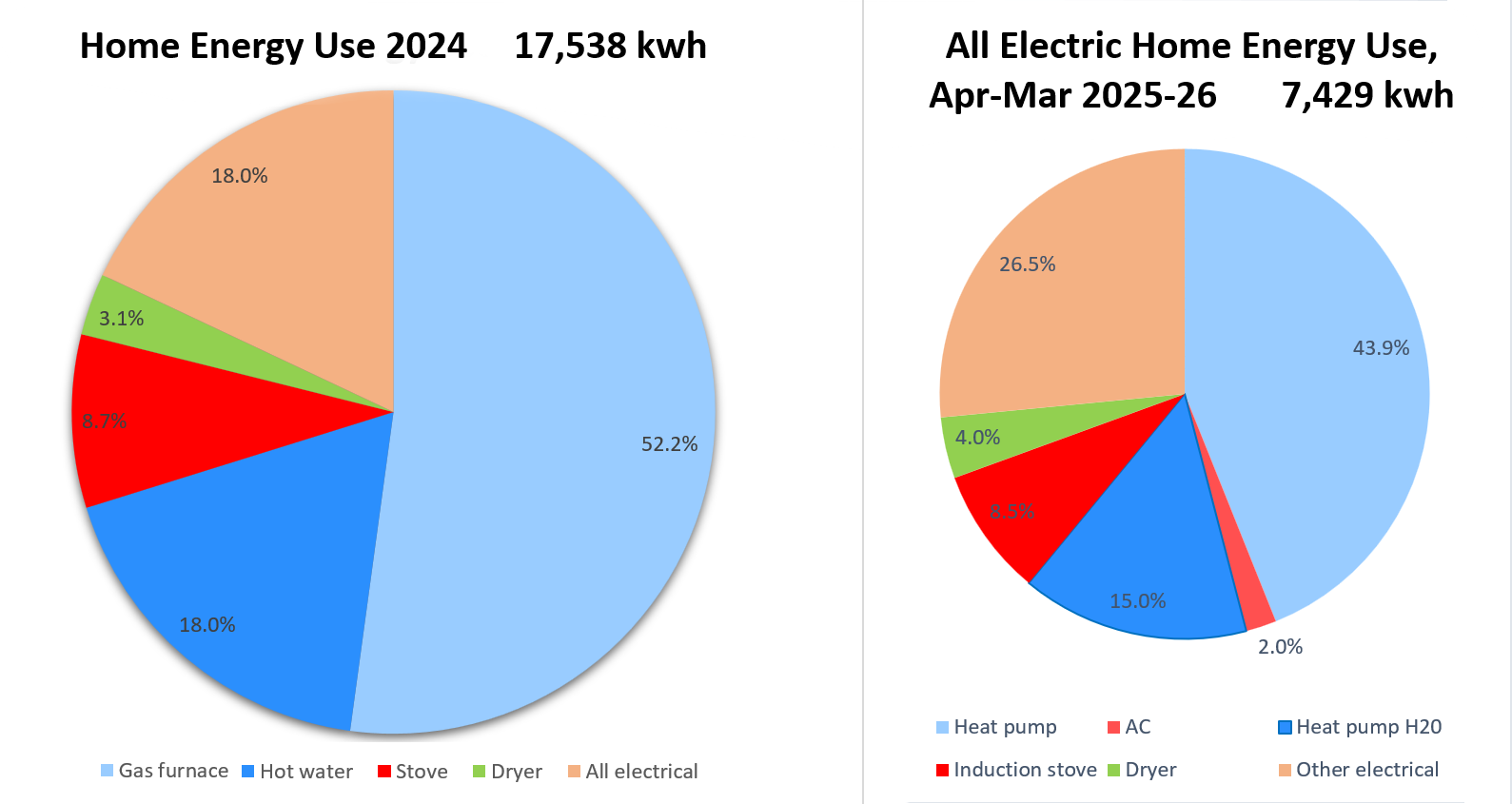
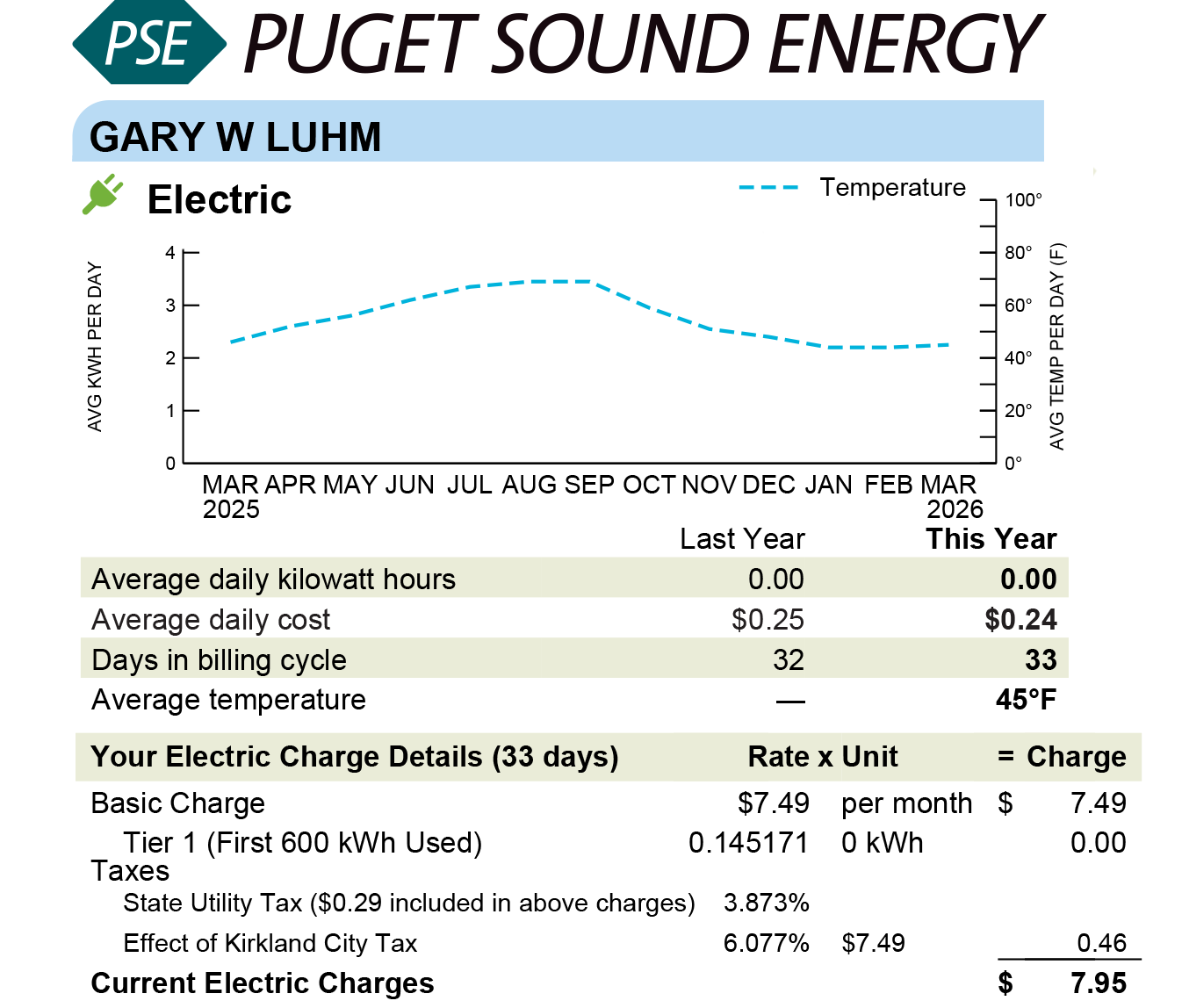
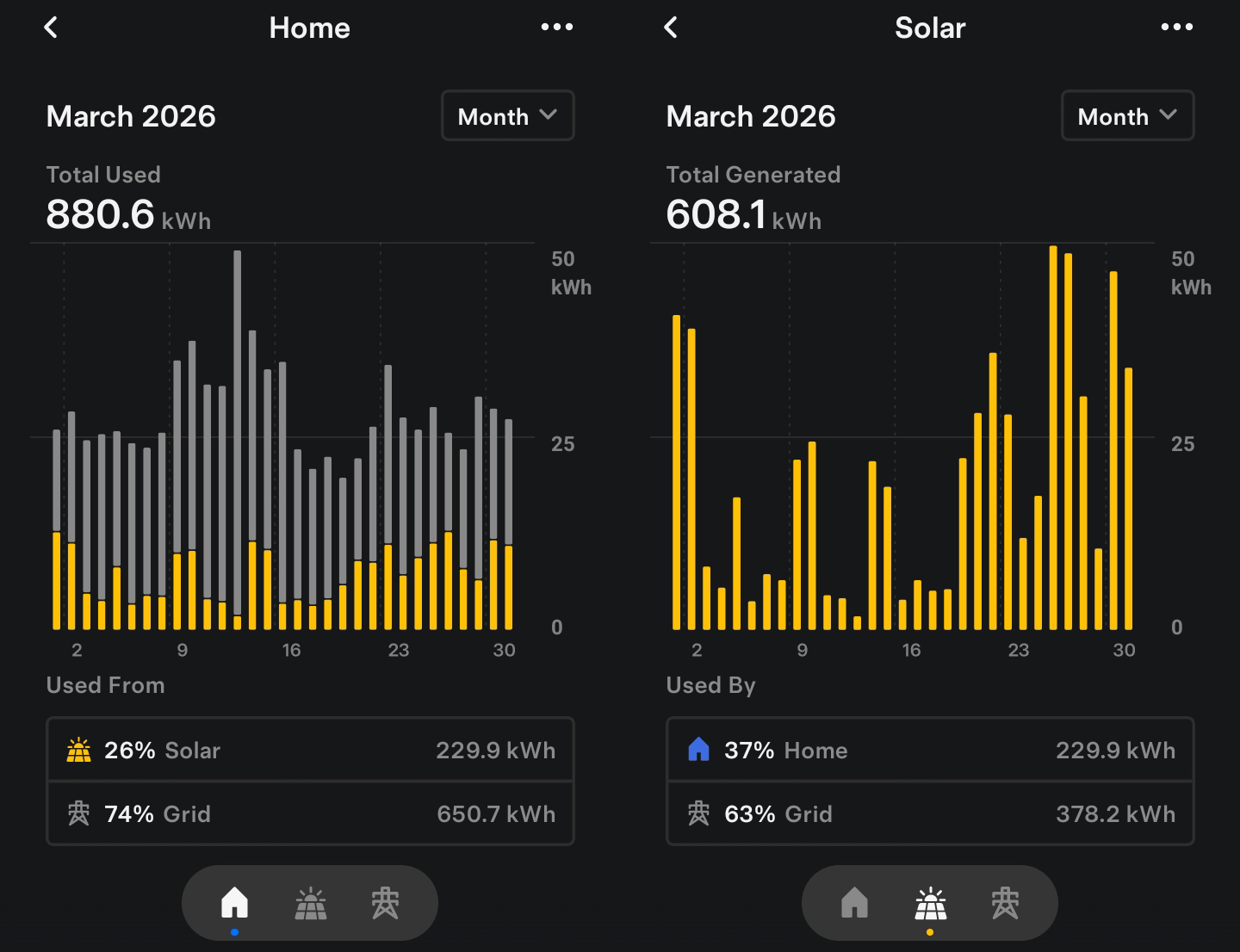
Heat pumps are manyfold more efficient than gas, especially in a mild maritime climate like the Seattle area. Because of heat pumps, the total energy used by our home dropped from 17,538 kwh2 (2023-24 data) to 7,429 kwh, a drop of 58%.3
Electrification saves energy. Bill McKibben, writing in Here Comes the Sun, said electrification will drop energy use 56% nationally, assuming equivalent living standards.
House heating heat pump
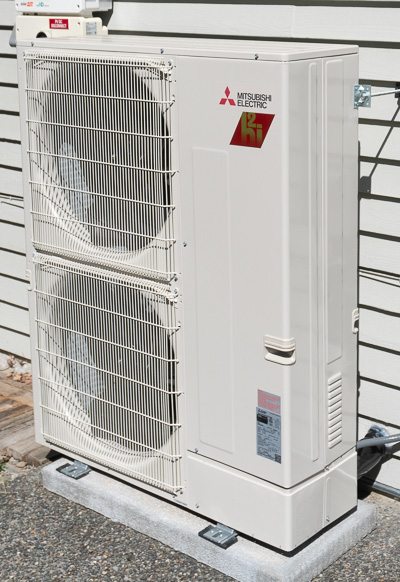
House heat in general is the biggest energy hog for residential homes in northern USA, in our case consuming 52% of all energy prior to electrification. With a COP of about 3 for our new heat pump, heating energy dropped 71%.4 Our heat pump is a central system: an outdoor condensing unit, air handler in the garage, ductwork in a crawl space and ten registers. In general, we have controlled the heat pump much like we did the gas furnace, turning it off at night and back on in the morning. We found that in the shoulder months with overnight temperatures dropping to 40F or warmer, this saved energy. In the old gas heat days, we always set the thermostat down to 60F at night and set it back (68F) when we got up in the morning. Additionally, because we don’t use the large master bedroom during the day and prefer a colder room for sleeping, that resister was closed during the heating season, Oct-May.
Heat pump water heater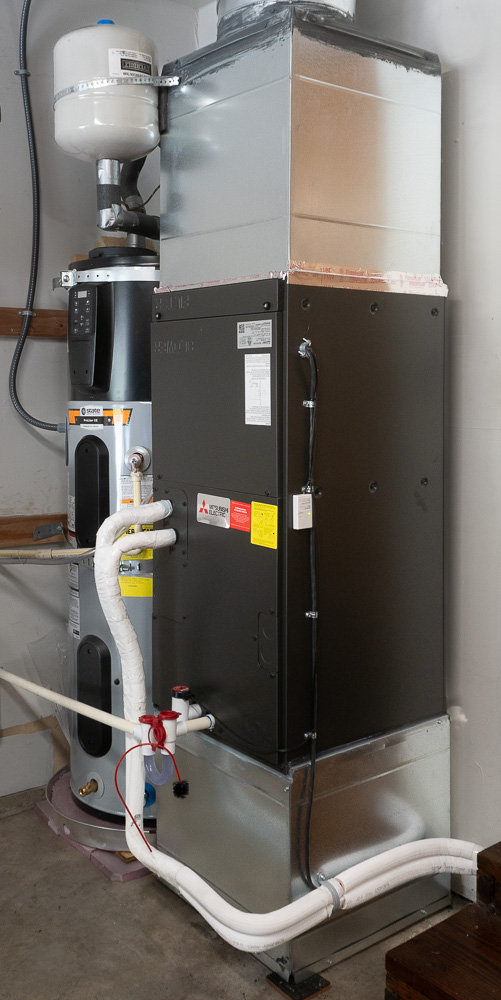
The second biggest user was the old gas water heater, 18% of home energy. Using a COP of 2.3, water heater energy savings with a heat pump was 64%.5 I was concerned that its location in the corner behind the furnace in the garage would obstruct air flow, affecting efficiency. As well, the unit is a hybrid, with back-up resistance elements. The user manual states that when the garage air temperature drops to 37F, the heat pump shuts down (to prevent coil frost), and the resistance elements kick on. In normal operation the unit draws its heat from garage air; cold exhaust air is not ducted to the outside. I was pleased to note that although the winter garage temperatures seemed colder as a result, it never to my knowledge got cold enough to revert to resistance back-up. Summer efficiencies, BTW, are so good it seems to run then on next to nothing.
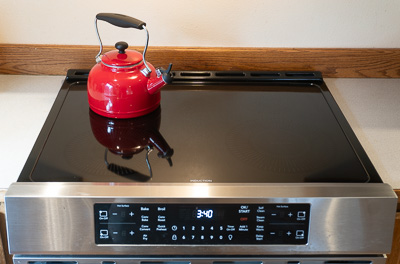
Our three-year-old, gas-replacement induction stove also saved energy. Induction is roughly 60% more efficient than gas, heats quicker, controls better, cleans easier and doesn’t pollute the home. The electric oven is also more efficient than a gas oven, with better control and no indoor pollution.
Air conditioning
Prior to the heat pump installation, we had no air conditioning (AC). We felt relief to have AC for our increasingly hot summers. But we worried about the energy it would use. As it happened, the past summer was mild with only one day over 90F. A tally from our monitoring app showed minor spikes on 16 days (indicating AC use). On those days we had manually turned AC on, totaling 150 kwh, a pittance. Many, many summer days the AC stayed off. In practice, we turned on AC when the indoor air reached 76F or thereabouts, with the thermostat set at 75F. The AC then ran from about 3 pm until 8 pm. Very important, we continue the strategy of opening up the windows and sometimes doors in the evening, early morning and/or all night as needed to cool the interior, depending on the forecast.
Clothes dryer
Compared to gas, our electric clothes dryer saves energy but not cash. As I said in All Electric Homes Use Less Energy, DOE data states electric dryers dry “3.94 pounds of clothes/kwh, gas dryers 3.49”, a 12% reduction favoring electric, but that’s not nearly enough to save money. To be competitive on energy cost, heat pump dryers are available, but as a two-person adult household, we don’t use the dryer enough to justify the pricier heat pump.
Refrigerator
We opted for a top-compartment freezer when we needed a refrigerator in 2018. Top compartment is a more-efficient design. Bottom freezers, or worse, side-by-sides, are less so, and are also more expensive.
Dishwasher
Our 1987-built dishwasher still works fine, but according to data, it consumes about 14 gallons of water compared to 3-4 gallons for new, efficient models. When it fails, we’ll need a few days of hand dish washing while we research a new, more efficient model.6
Other electrical
“Other electrical” from the above pie chart is large now relative to everything else, 26.5% including the dryer and refrigerator. Take those out and it’s still 17%. Culprits are two desktop computers, LED lights, TV, power strips, energy powering various other appliances, chargers for lawn mower, tools, phones and cameras, plus a solar inverter and sump pump. Difficult to find savings here beyond what we’ve already done.
Addendum
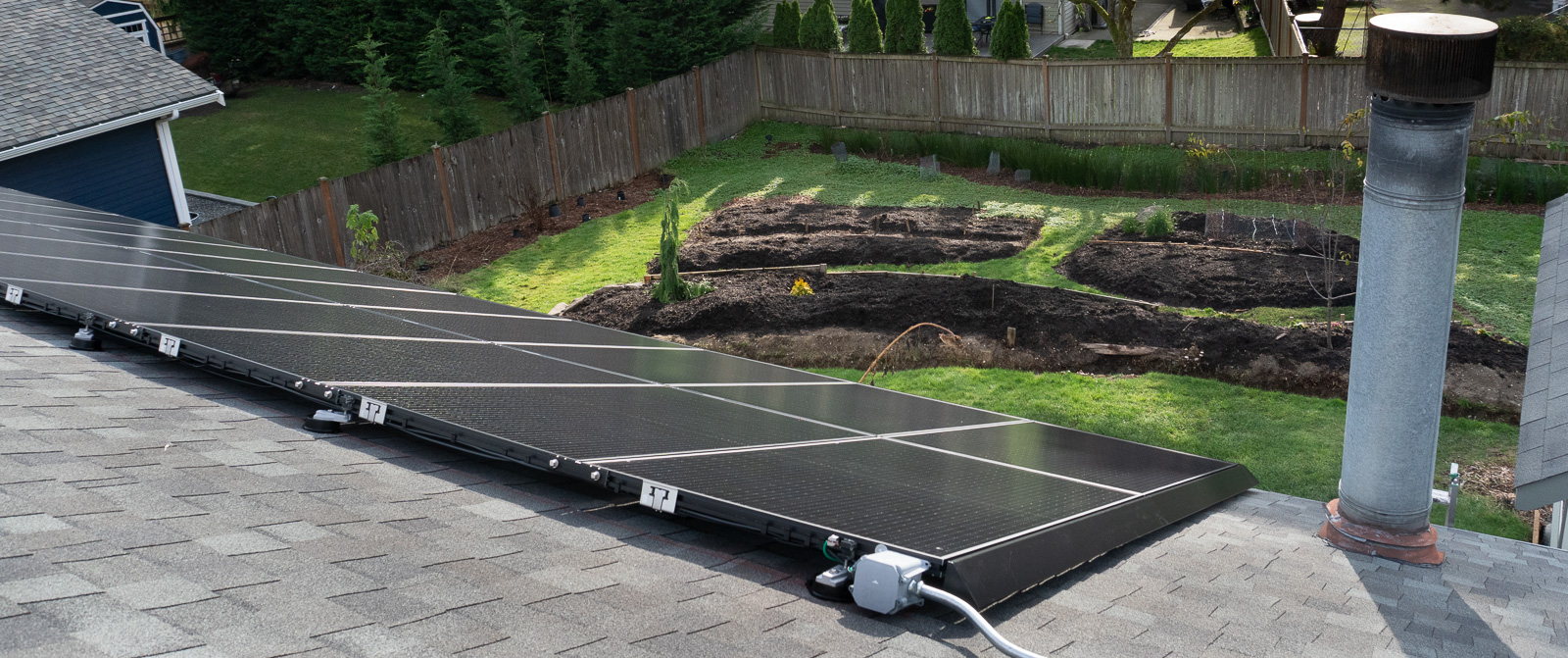
When we put our solar panels up in 2020, I said the USA is a brittle power with over-reliance on fossil-fuels. Shortly after that, solar energy became the cheapest new energy source (and fastest to install), and in 2026 I believe it is the cheapest energy source in world history.7 A smart administration concerned about national security would be all in for solar, reduce our oil and gas dependency, and promote distributed renewable electrical power throughout the grid. As well, from a world perspective, knowing peak oil is near, oil companies are reluctant to invest fearing stranded assets. Countries like the USA that choose to rely on fossil fuels will eventually suffer competitive disadvantage.
Electrification solves our energy and climate future.8 I also said back then, “Every State in the USA has enough renewable potential to meet all energy needs using a mix of solar, wind, batteries, hydro, pumped storage, load shifting and peak-load pricing (perhaps should add regulation). The transformation to renewables will create jobs, stimulate the economy and help secure the future of our grandchildren . . . I welcome the energy security and livable planet implications of a solar future.”
Gary is volunteering for Energy Smart Eastside, with communities of Bellevue, Kirkland, Redmond, Mercer Island, Sammamish and Issaquah participating. Its primary purpose is a campaign to replace gas and oil furnaces with heat pumps. Incentives are paid through the Washington State climate law. If you’re still heating with fossil fuels, check us out, and make your next choice a heat pump.
Comments appreciated,
Gary
Footnotes
1See 100% Solar-Powered All-Electric Home. That analysis was based on all-electric home energy compared to 2019 data.
2One therm = 100,000 Btu = 3,412 kwh.
3For our original yearly consumption estimate we started with the 2019 base of 20,008 kwh. After 2020 conservation measures, the 2023-24 base was 17,573 kwh, which led to a new estimate of 7,745 kwh for the all-electric home, not accounting for AC because that was a new load. Our yearly average solar production of 9,377 kwh so far is quite a bit more. Our actual use, Apr-Mar, 2025–26 was 7,429 kwh. Thinking back to 2020, we had installed all new vinal-frame windows to replace the aluminum-framed ones, many of which were popped with water vapor between glass. We also installed honeycomb blinds. I credit much of our energy reduction to the window replacement, blinds and possibly some behavioral changes on our part. Seasonal heat load, lower than average, probably played a role as well.
4COP is Coefficient of Performance, a ratio of heat delivered divided by energy in. Additional home heat savings come from behavior change, for example closing the register in our large master bedroom Oct-May because we prefer to sleep in a cooler room.
5An inefficiency of the old water heater was a continuously burning pilot light. It used a mechanical thermostat and did not need electricity for control. Replacing it meant the added expense for 240V wiring.
6Good practice when equipment nears end of life is to have a plan. Most important is home heat (some places air conditioning), water heater and refrigerator/freezer. Dish washer, not so much. Replacing before they die can/should be a plan, but in any case do your homework and favor efficient, electric appliances.
7According to the International Energy Agency (IEA) in its World Energy Outlook 2020, solar energy is officially the cheapest source of electricity in history. This is for utility scale solar, but cost have come down even more since. In the USA, solar is hampered by local regulation in many states, and by labor costs. In the most northern states especially, summer and winter disparities in solar generation call for a diversified energy mix, but no fossil fuels is possible everywhere.
8See Mark Z. Jacobsen “No Miracles Needed” or or Saul Griffith “Electrify”.