
 In June, 2002, I was privileged to be aboard the charter yacht Ursa Major on her first sail to Lituya Bay, Glacier Bay National Park, Alaska. Our cruise started in Ketchikan. At the start I wasn’t aware of Lituya’s notorious reputation. Unlike much-travelled Glacier Bay—which opens to the Inside Passage—Lituya faces west toward the tempestuous Gulf of Alaska. Towering Fairweather Range peaks separate the Bays. Aerials of the Fairweather Fault that scars the back of Lituya make the San Andreas fault look quaint. Boats venture here at their peril.
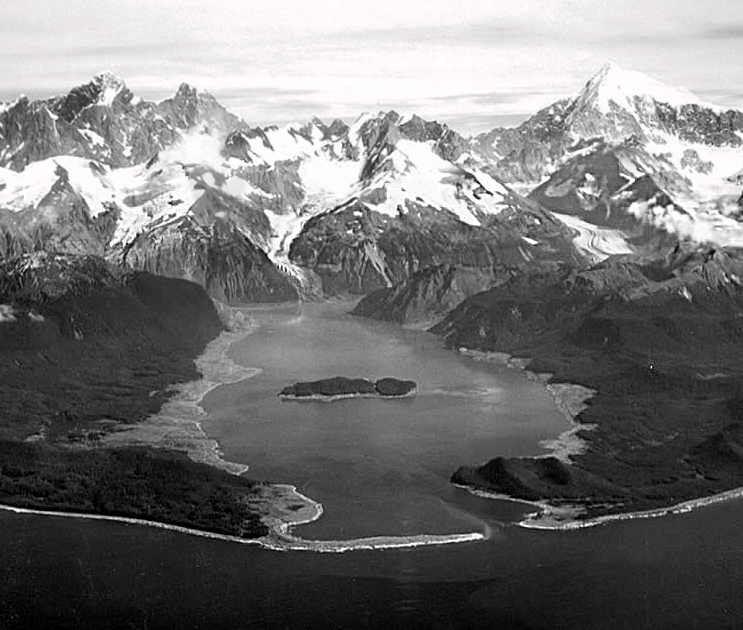
Phillip Fradkin’s book Wildest Alaska: Journeys of Great Peril in Lituya Bay was passed around by Ursa Major guests in the weeks prior to our visit. We thus approached the inlet with some trepidation—except for our ex-Navy boat captain Ron—but he didn’t read the book. As we motored along the coastal approach, our timing was late for the tidal pause at the entrance. I recall asking Ron, not once but several times, “We’re going to enter on the slack, right?”**
We encountered Lituya Bay without mishap.
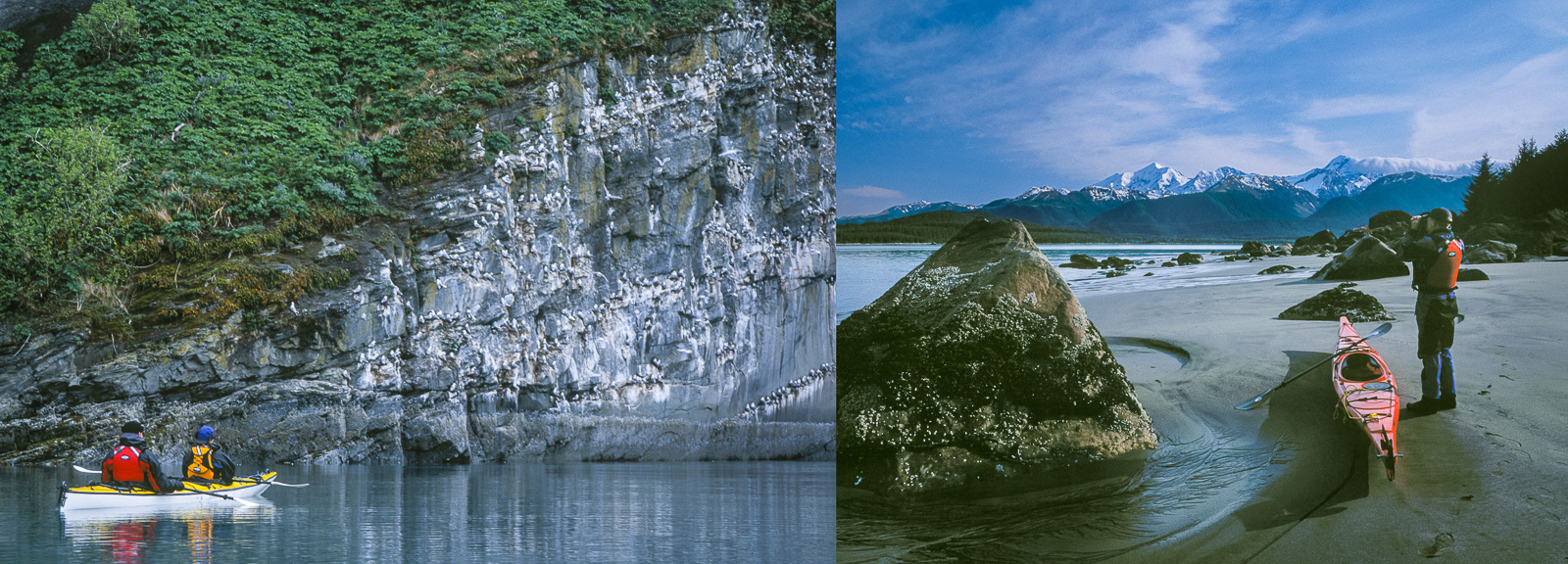
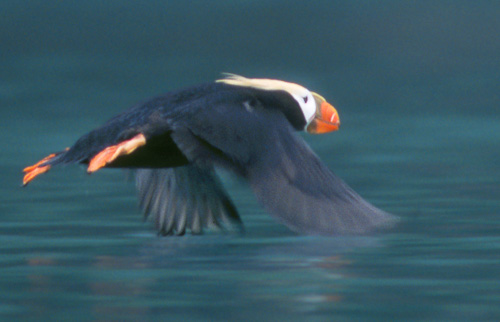
I solo paddled much of the Bay, anxious to see it all in our two-night stay. I was disappointed that the receding glaciers were no longer tidewater, but the stark relief of the soaring peaks impressed. At mid-bay, Cenotaph Island was strewn with shorn deadwood from the ‘58 tsunami. A south-facing Cenotaph cliff hosted nesting Black-legged Kittiwakes; Horned and Tufted Puffins perched on the rocks. Snow-capped, 15,300-foot Mt. Fairweather came into view from shore at the south side of the Bay near the mouth. The feel of the place was wonder.
Importance of Foreground
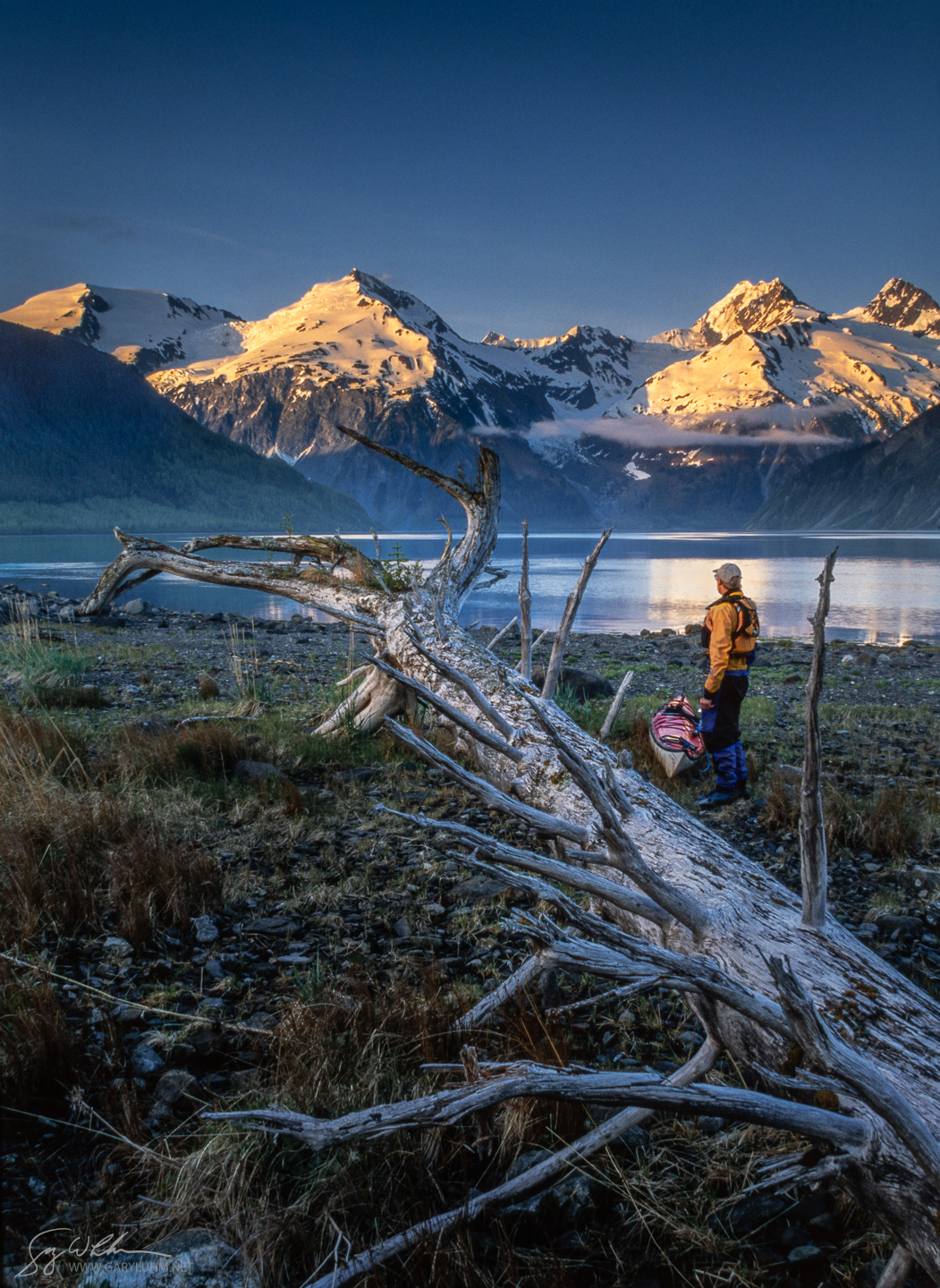
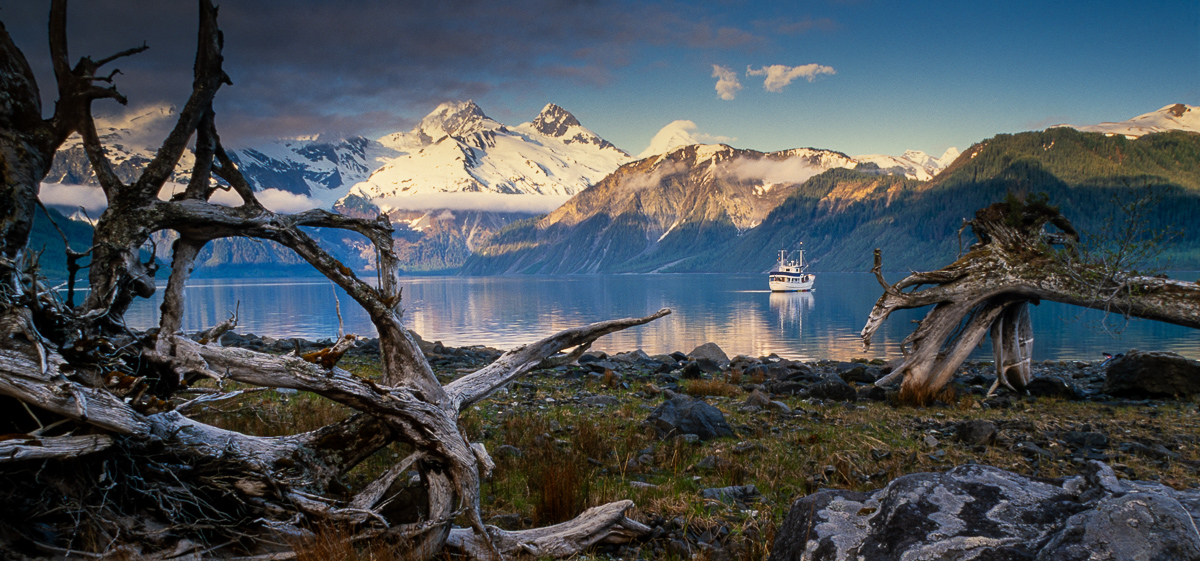
The image was shot on Velvia film with a Canon 24mm Tilt Shift TS-E f/3.5L lens, hard-graduated three-stop neutral-density (ND) filter, ten-second time delay and sturdy tripod.***

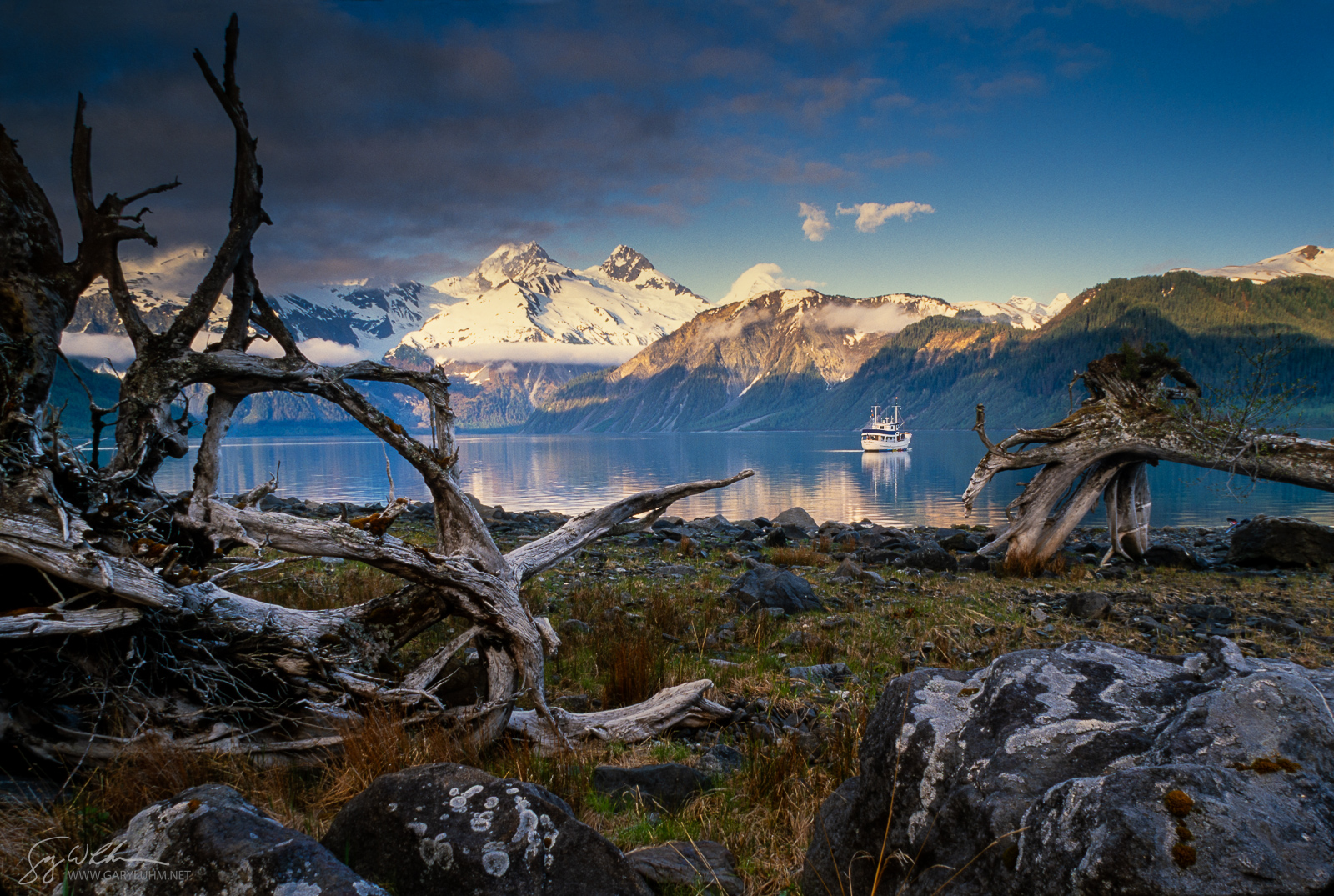 The photo, right and top (13:6 crop), was shot the same morning when I found deadwood to neatly frame the Ursa. The bare root pointing like a javelin at the ship with the opposite root-remains acting like a backstop leave no doubt where to look. The foreground rocks—along with the downed wood—add depth and interest.
You can also see the result of the hard-grad ND filter where it splits the shaded roots. Velvia film was noted for good blacks. The film scans don’t do it justice, but here the split filter, needed to capture the sunlit whites and foreground in a single shot, renders detail in the upper limbs unrecoverable. Today, a series of different exposures combined for an HDR image make split ND filters obsolete, artifacts of the film days. All that said, this image is my favorite from a three-week trip.
Gary
* The French La Perouse expedition, 1785-1788, consisted to two ships, La Boussole and L’Astrolabe, and 225 men.
**In retrospect, Ron probably knew we would be entering on a rising tide, during a moderate, safe, flood current.
***Both showcase images here were re-scanned using a home-made scanner. The fresh scans increased the available pixels by 8% relative to a (circa 1999) 4000 dpi scanner, with similar softness but less noise.
Footnote:
1Fradkin, Phillip. Wildest Alaska: Journeys of Great Peril in Lituya Bay, University of California Press, 2003. p. 131 et al.
Stupendous! Thank you, Gary. Good to know there are still some glaciers left.
Incredible photos. Sounds like it was a wonderful adventure!
Thanks, Lin. I re-read the Fradkin book about Lituya before I posted this and among the scariest parts was Fradkin’s own visit, with grizzlies walking thru camp at night. We were really safe there on an ocean-going yacht.
Always a pleasure to see your images Gary. They never disappoint.
Impressive work from the film photography days. It took a lot more patience and planning since you would not see the results for any days or even weeks.
Thanks, Dan. You’re not kidding about the wait to see results! A three week trip, I probably took 40 rolls of film. Being Alaska, I didn’t mail film off using pre-paid mailers during a Sitka or Juneau stop like I would do in the lower 48, or at least I don’t think I did. But my enthusiasm for photography was high back then, every day of that trip was a wonder, my first experience of SE Alaska after prior self-supported kayak trips to Kodiak and the Kenai Fjords, and visits to the Anchorage area and Denali NP.
Gary! Remarkable photos, as always! As you might expect, I particularly enjoyed your thoughts that followed along these lines:
“The diagonal line of the trunk leads the eye, adds hugely to depth and sets up the shot with the mountain backdrop. The human figure and kayak add scale, color compliment and a bit of drama. I especially like that old roots frame the carnage that took place on the mountainside.”
As in good design, there’s “movement” in good still photography. People may not see it, but regardless, they benefit from it. Honestly, that particular lack of understanding is great. It adds to the magic!
Great photos, and thanks for sharing your memories and thoughts of the trip! Always interesting!
Nick You introduced me to chiaroscuro, light dark contrast that so dominate much of Rembrandt’s work. Your study and appreciation of art gives you incite the rest of us miss.
I always love looking at your shots absolutely the most beautiful you do such a great job.
Beautiful photos, Thanks for sharing.
Thank you, Vince.
You make it look like a painting, like a great work of art, and like you are living and breathing the experience.
Rick
Hey Gary, Very nice work indeed. I keep learning from you. It’s great.
Andy
Thank you, Gary for sharing your amazing photos!
Joan
I agree with Andy. Very interesting narrative to go with the great photos.